

- Easy Tips to Stop Overshooting and Improve Your Flick Aim in FPS Games - July 23, 2026
- How to Actually Hit Your Shots and Get Better in Marvel Rivals - July 13, 2026
Missing your shots in a high-pressure online match can feel completely random, but there’s science behind why it happens and a solution anyone can use.
It’s not about bad aim or endless grinding. Most missed flicks come down to tense hands and a lack of full understanding of how and why fast aiming works. A few tweaks can clean up your flicks fast. Here’s why you’re missing and how to fix it, in ranked or casual matches in your favorite FPS games.
1. Warm Up With an Accuracy Threshold
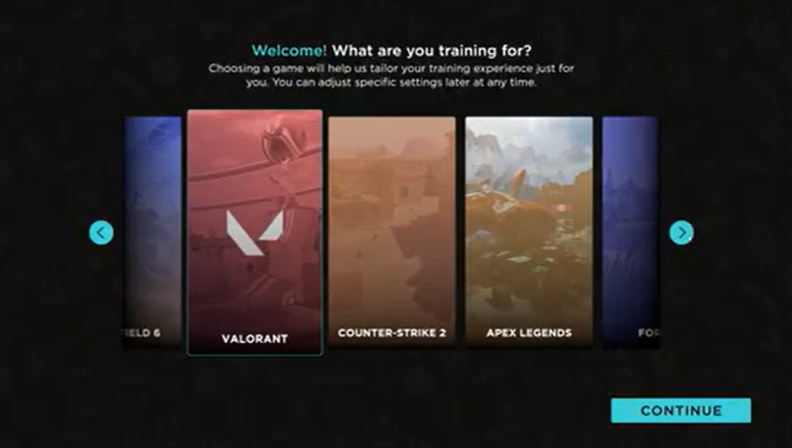
The first tip to improving your flick aim is finding a good warmup routine, since the difference between spending 20 minutes on one versus skipping it entirely is staggering. Training your hand to stop overshooting means stepping away from random grinding and replacing it with a structured calibration routine before your first match of the day. The full sequence below only takes three to four minutes per phase across four phases, about 20 minutes total.
Aimlabs is a free AI-powered platform that’s perfect for this, with a massive library of built-in flicking tasks (like Spidershot, Sixshot, and Reflexshot) along with community-made playlists matched to the exact settings and sensitivities of over 400 games.
Step One: Wide, Predictable Targets
Start by targeting large, predictable arrays, like the Pentaflick scenario, where the focus isn’t on speed but on deliberately moving your mouse in a wide path and consciously relaxing your hand as your crosshair nears the target, letting it glide and stop precisely at the center.
Step Two: Micro-Correction Calibration
From there, move on to micro-correction calibration by practicing on tiny target arrays like Microshot Ultimate. This exercise isolates your finger and wrist control, making even the smallest overshoots obvious and helping sharpen your fine motor skills.
Step Three: Multi-Angle Randomness
Once that’s dialed in, introduce randomness with multi-angle arrays such as Burst Flick Ultimate, since variable target placements force your brain to recalculate spatial distances on the fly and keep you from settling into bad muscle memory patterns.
Step Four: Review Your Session Data
Finally, take a minute to review your session data on the dashboard, where advanced Aimlabs features like Results+ can analyze your movement patterns and highlight tendencies such as underflicking to one side or struggling with vertical targets.
Going Deeper With Aimlabs+
For $10 a month, you can pick up the Aimlabs+ membership tier, which works like a personal trainer, but for your games instead of your gains. The base platform is free on Steam, Xbox, PlayStation, Android, and iOS, and if you’re serious about improving, Aimlabs claims users see 49% faster progress with its premium features.
While the free dashboard covers foundational metrics like accuracy percentage and reaction time, along with native replay of your movement sequences, the premium tier goes further by running your movement patterns through an automated AI Aim Coach.
That coach analyzes visualizations like scatterplots, graphs that map your shot placements across multiple attempts, so instead of guessing why your wide snaps are inconsistent, it interprets the underlying data, identifies specific flaws in your technique, and recommends customized adjustments that target your actual weaknesses.
A Top Tip: Stick to 95% Accuracy
One habit worth building in from day one: stick to a minimum of 95% accuracy. If that number drops below 95%, you’re moving faster than your hand can decelerate. Force yourself to slow down until you’re consistently landing clean headshots, then gradually build speed back up from there.
2. Separate Your Aim Into a Wide Flick and a Micro-Adjustment
The biggest mistake everyday players make when trying to learn how to flick is treating it like one big, explosive movement that magically lands perfectly on the head. If you watch high-elo vods in slow motion, you’ll realize that even the cleanest mechanical players rarely hit a raw, single-motion flick.
Real accuracy is a two-step move. First, you flick fast to get close. Then you slow down and use your wrist or fingers to line up the shot before you click.
Overshooting happens when you try to merge these two steps into a single, frantic swipe. When an enemy jumps you, your caveman brain panics, leading you to squeeze the mouse with a white-knuckle death grip.
This high muscle tension makes your initial movement insanely fast, but it completely locks your fingers, rendering them unable to absorb the mouse’s physical inertia. The mouse flies right past the enemy’s skull. Break your aim into a distinct broad movement followed by a deliberate micro-correction, and don’t force the shot until the second phase registers.
3. Train for Straight-Line Path Efficiency
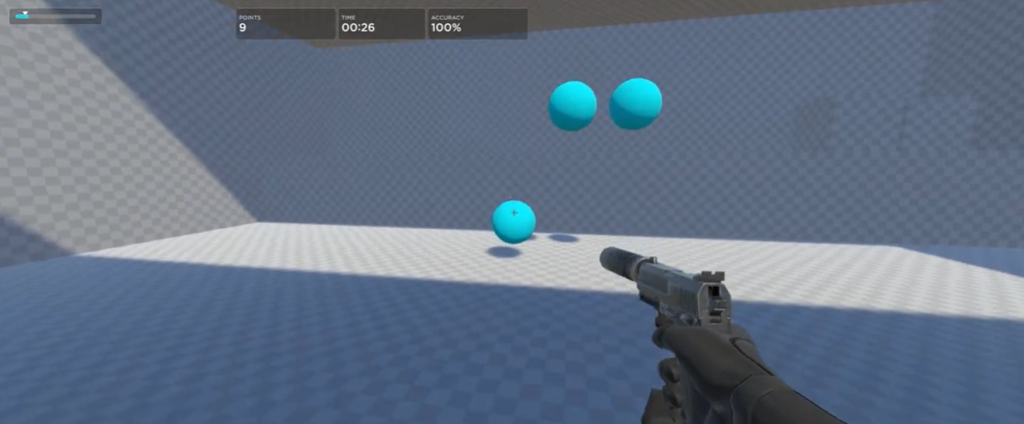
Precision is the goal, but it’s easier said than done. Most people try to fix overshooting by firing as many shots as possible at the practice range. That just teaches your hands to be messy and inconsistent.
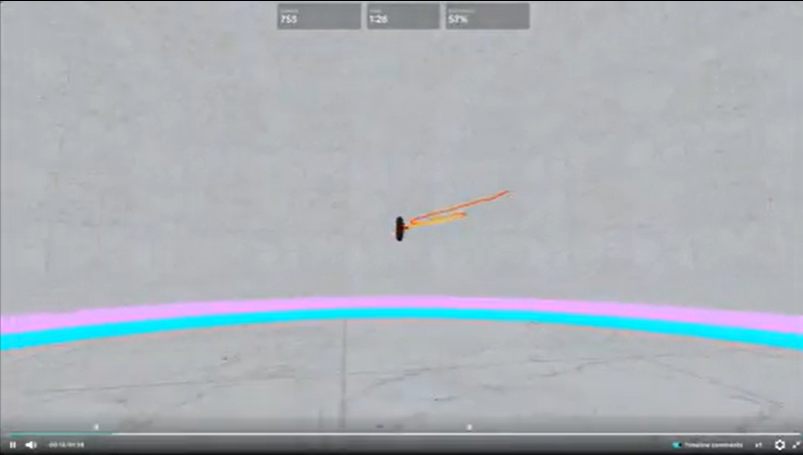
To build real muscle memory, you’ve got to force your hand to travel along a straight line from point A to B. This is called path efficiency. In Aimlabs, you can go into your practice setup and deliberately slow down your hand velocity until you can draw a perfectly straight laser line to the target’s head mass with zero curved paths, zero zig-zagging, and zero shaking.
Once your path lines are perfectly straight and your deceleration is stable, speed will develop naturally on its own.
4. Don’t Overthink the Mechanics
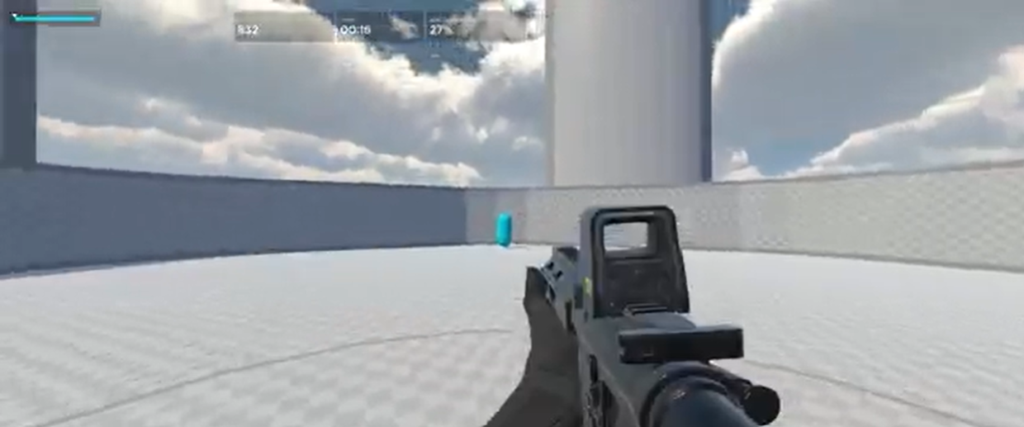
In the middle of a chaotic ranked match, your brain can get overwhelmed very quickly.
You’ve got to dodge incoming projectiles, track ability cooldowns, manage your positioning, and listen to team comms. You do not have the cognitive bandwidth to figure out why your hand is slipping, which can lead to frustration and getting tilted, making it all the more difficult for you to improve your aim.
In contrast to competitors such as KovaaK’s and Aimbeast, which require an upfront purchase and are limited to PC platforms, Aimlabs offers a core engine that is entirely free and accessible on multiple platforms.
It doesn’t matter whether users are on Steam, Epic Games, Xbox, PlayStation, or iOS/Android, everyone will receive access to identical tracking techniques, custom environment options, and first- and third-person perspectives, all without encountering a paywall.
If you want to improve your flick aim quickly, Aimlabs includes a free built-in sensitivity finder known as the Flick Optimizer, whereas separate software like Oblivity force you to pay just to calculate your physical hand-to-mouse translation ratio.
5. Regulate Downward Pressure and Mid-Game Hand Tension
The ultimate barrier to fixing your aim is making sure your smooth warmup mechanics actually show up during a stressful, high-stakes moment. Most players warm up with a relaxed hand, but the second a ranked point goes into overtime, they tense up their arm and go right back to frantic panic-swiping.
The single most helpful trick to fight this is to monitor your downward mouse pressure. Under stress, many players unconsciously press their mouse down hard on their mousepad. This creates immense friction, making your aim look “sticky” and nearly impossible to execute smooth micro-adjustments when an enemy counter-strafes.
Set a quick mid-game self-check. Whenever you are sitting behind cover, waiting for a respawn, or rotating between objectives, check your physical tension. If your wrist feels stiff, your palm is sweating, or you’re digging your fingers into the side grips, take half a second to lift your hand, shake out your wrist, and reset back to a loose, fluid grip.
If you play VALORANT, Call of Duty, Marvel Rivals, or most mainline FPS games, Aimlabs+ gives you extras like map recreations and crosshair trainers. But free or paid, the goal’s the same: to improve your flick aim, stop randomly swiping, track your aim with pinpoint precision, and don’t be afraid to tackle your specific weakness to massively improve your flick aim.